
Natural-Looking Facial Definition, Tailored to You
Facial ageing can gradually affect volume, skin structure, definition and the proportions of the face. Changes may be particularly noticeable around the cheeks, chin, jawline, temples and lower face.
If you would like to improve facial definition, restore selected areas of volume or support a more balanced facial contour, injectable treatments may be an option to consider.
At Molaesthetics in Milton Keynes, we take a personalised approach to facial contouring. Depending on your facial anatomy, skin characteristics, existing volume and aesthetic goals, treatment may involve hyaluronic acid (HA) dermal fillers, calcium hydroxylapatite (CaHA) or poly-L-lactic acid (PLLA).
Each treatment works differently. Some products are primarily used to provide immediate structural support and volume, while others can be used to encourage collagen remodelling over time.
The aim is not simply to add volume. Our approach focuses on facial balance, proportion, definition and a natural-looking result.
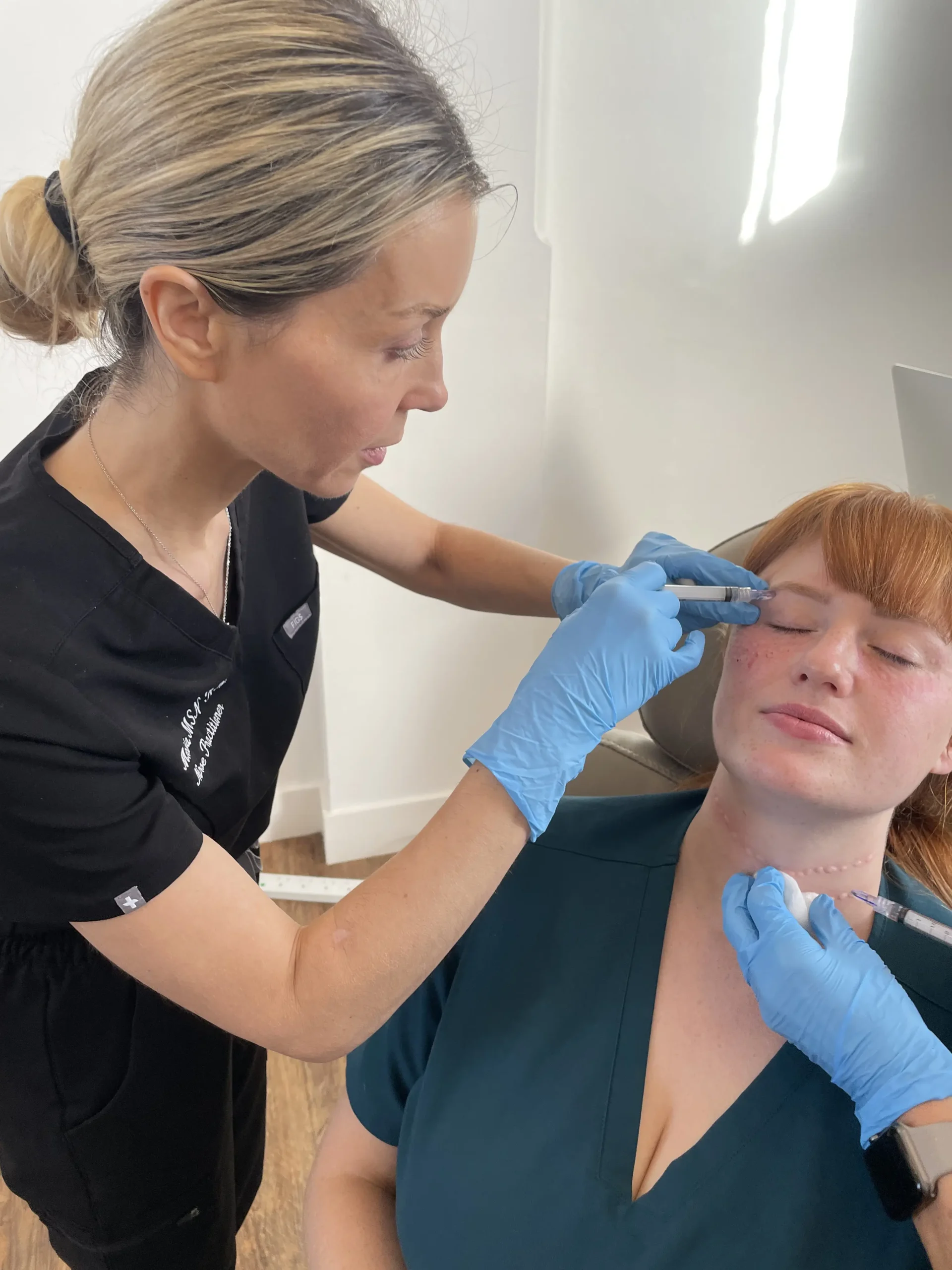
What Is Facial Contouring?
Facial contouring involves carefully planned treatment of selected areas of the face to improve definition, proportion or the appearance of age-related volume changes.
Rather than treating the entire face in the same way, your practitioner will assess your individual facial structure and identify the areas where treatment may be appropriate.
Depending on your needs, facial contouring may involve:
- Restoring selected areas of lost volume
- Enhancing cheek definition
- Improving chin projection or definition
- Defining the jawline
- Supporting lower-face proportions
- Improving facial symmetry
- Refining facial contours
- Improving the appearance of selected areas of skin laxity
- Supporting a more balanced relationship between different facial features
Facial contouring does not necessarily mean creating more volume. In some patients, a relatively small amount of treatment in carefully selected areas may be sufficient.
Your Facial Contouring Options
At Molaesthetics, different injectable materials may be considered depending on the treatment objective.
HA Dermal Fillers
Hyaluronic acid (HA) dermal fillers are injectable products containing hyaluronic acid. Depending on the specific product, they can be used to restore or add volume and improve the definition of selected facial features.
HA fillers are available in different formulations, with different characteristics and intended uses. Your practitioner will select an appropriate product according to the area being treated, your facial anatomy and the desired outcome.
HA may be considered for areas including:
Cheeks
Mid-face
Chin
Jawline
Lower face
Temples
HA can be particularly useful where the treatment objective involves precise placement of volume or structural definition.
The amount required varies considerably between individuals. A personalised approach helps avoid unnecessary volume and allows treatment to be planned around your existing facial proportions.
Calcium Hydroxylapatite (CaHA)
Calcium hydroxylapatite (CaHA) is an injectable dermal filler material that can provide volumising effects and, depending on how it is used, may also be used for collagen-stimulating or skin-quality treatments.
Clinical literature describes the use of CaHA for facial volumisation and contouring, including treatment of the mid and lower face and jawline. Diluted or hyperdiluted CaHA has also been described for skin laxity and biostimulation.
The way CaHA is used depends on the product, treatment area, injection technique and clinical objective.
For selected patients, CaHA may be considered when the treatment plan focuses on:
Facial definition
Jawline contour
Mid- and lower-face support
Selected areas of volume loss
Skin quality and laxity
Collagen biostimulation
CaHA is not simply an alternative to HA. It has different physical and biological characteristics, so your practitioner will assess whether it is appropriate for your individual treatment plan.
Poly-L-Lactic Acid (PLLA)
Poly-L-lactic acid (PLLA) is an injectable collagen-stimulating material used in selected facial rejuvenation treatments.
Unlike conventional volumising treatment, the objective with PLLA may be to encourage gradual collagen production and progressive improvement in facial volume and contour rather than relying solely on an immediate filling effect.
Published consensus recommendations describe PLLA as an option for facial and non-facial volumisation, with treatment planning and injection technique being important considerations.
PLLA may therefore be considered where the treatment objective is to address gradual changes in facial volume and support a more progressive improvement in facial contours.
Treatment generally requires careful patient selection and an appropriate treatment plan because the effects develop over time rather than being assessed solely immediately after injection.
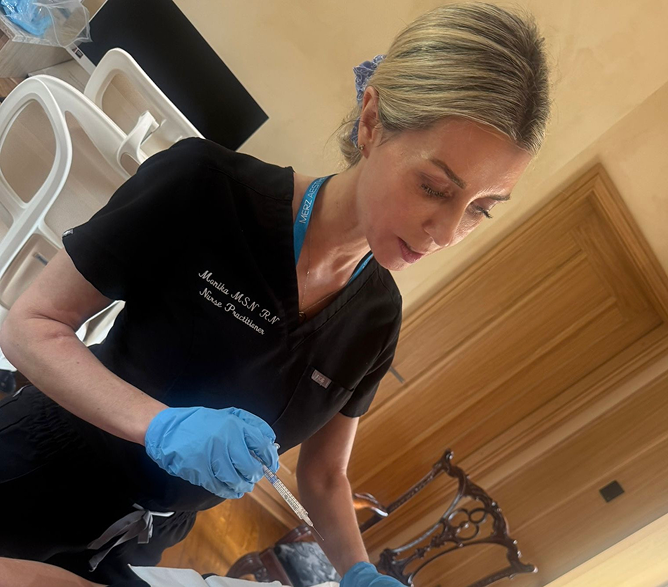
HA vs CaHA vs PLLA
These injectable treatments are not interchangeable.
| TREATMENT | GENERAL ROLE | TYPICAL TREATMENT OBJECTIVE |
|---|---|---|
| HA dermal filler | Volume and structural support | Definition, contouring and selected volume restoration |
| CaHA | Volumisation and, in selected techniques, collagen biostimulation | Contouring, structural support and selected skin-quality concerns |
| PLLA | Collagen stimulation | Gradual improvement in facial volume and contour |
The most appropriate option depends on your facial anatomy, skin characteristics, treatment area, previous treatments and desired outcome.
Your practitioner will discuss the available options during your consultation rather than assuming that one injectable is suitable for everyone.
What Areas Can Be Treated?
Facial contouring may involve one or more areas depending on your individual anatomy.
Cheeks
Treatment may be considered to restore selected areas of mid-face volume or enhance cheek definition.
The objective is not necessarily to create prominent cheeks, but to improve the relationship between the cheek, mid-face and surrounding facial structures.
Chin
Chin contouring can be used to improve projection, definition or facial balance in suitable patients.
Small changes to chin structure can influence the perceived proportions of the lower face.
Jawline
Jawline contouring may be considered where there is reduced definition or where additional structural support may improve facial proportions.
Depending on the patient, HA or CaHA may be considered for selected jawline treatments.
Lower Face
Age-related changes can affect the lower face through changes in volume, skin laxity and definition.
A treatment plan may therefore focus on selected areas rather than simply adding volume throughout the lower face.
Temples
Volume loss around the temples can alter facial proportions in some individuals.
Temple treatment requires careful anatomical assessment because of the complex anatomy and potential risks associated with injectable treatments in this area.
Mid-Face
The mid-face can be affected by changes in volume and soft-tissue support.
Treatment may be considered to restore selected areas of volume and improve overall facial balance.
Facial Contouring Is Not One-Size-Fits-All
Two people can have similar concerns but require completely different treatment plans.
Factors that may influence treatment include:
- Facial anatomy
- Bone structure
- Existing facial volume
- Skin quality
- Skin laxity
- Age-related changes
- Facial proportions
- Previous injectable treatments
- Treatment history
- Individual aesthetic goals
For this reason, your practitioner will assess your face as a whole rather than focusing only on the area you initially identify as a concern.
The objective is to understand how individual features relate to one another.
Your Facial Contouring Treatment Journey
01
Consultation
Your appointment begins with a detailed consultation.
You will have the opportunity to discuss what you would like to change or improve, your previous aesthetic treatments and your desired outcome.
Your practitioner will assess your facial anatomy, skin, existing volume and suitability for treatment.
Your medical history, medications, allergies and relevant previous treatments should also be discussed.
02
Personalised Treatment Plan
Following assessment, your practitioner will explain which treatment options may be appropriate.
This may include HA dermal filler, CaHA, PLLA or, where appropriate, an alternative treatment.
The choice of injectable is based on the treatment objective rather than simply using the same product for every patient.
Your treatment plan may involve one area or several carefully selected areas.
The amount of product and number of treatment sessions will depend on your individual requirements.
03
Treatment
Depending on the product and treatment area, injections may be administered using a needle or cannula where clinically appropriate.
Treatment technique varies between HA, CaHA and PLLA and is selected according to the product, anatomy and treatment objective.
Some products contain local anaesthetic, and additional measures may be available to improve comfort where appropriate.
You may experience brief discomfort, pressure, tenderness or sensitivity during treatment.
04
Aftercare
You will receive personalised aftercare advice following treatment.
Temporary effects such as swelling, redness, tenderness, sensitivity or bruising can occur following injectable treatments.
The nature and duration of these effects vary according to the product, treatment area and individual response.
Follow the aftercare advice provided by your practitioner and avoid unnecessarily pressing, rubbing or massaging treated areas unless specifically instructed to do so.
If you experience unusual, severe or worsening symptoms, contact your practitioner promptly for advice.
When Will You See the Results?
The timing of results depends on the treatment used.
With HA dermal fillers, some improvement in volume and contour can be visible immediately, although swelling following treatment can temporarily affect the appearance.
With CaHA, some effects may be apparent relatively soon after treatment, while collagen-related changes may develop progressively depending on the treatment technique used. Clinical literature has described CaHA for both volumisation and collagen biostimulation.
With PLLA, the treatment is generally intended to produce a more gradual change as collagen remodelling takes place. The result is therefore not assessed solely immediately after injection.
Your practitioner will explain the expected timeline for your specific treatment.
How Long Do Facial Contouring Results Last?
The longevity of treatment varies according to the injectable used, treatment area, amount administered and individual factors.
Factors that can influence how long results remain visible include:
- Product selected
- Treatment area
- Amount of product used
- Individual metabolism
- Facial movement
- Lifestyle
- Age-related changes
- Previous treatments
There is no single duration that applies to every patient.
Further treatment should be considered following assessment of your individual results rather than according to a fixed schedule.
Can Different Treatments Be Combined?
In selected patients, different injectable treatments may form part of a broader facial rejuvenation plan.
For example, an HA filler may be considered where precise structural volume or definition is required, while CaHA or PLLA may be considered where collagen biostimulation is an important part of the treatment objective.
Combination treatment should only be planned following appropriate assessment. The products, treatment areas, timing and techniques need to be considered carefully for each individual.
What Are the Risks?
All injectable treatments carry potential risks.
Common temporary effects can include:
- Swelling
- Redness
- Tenderness
- Bruising
- Sensitivity
- Temporary lumps or irregularities
More significant complications can occur, although they are uncommon.
Depending on the product and treatment area, potential complications can include infection, inflammatory reactions, persistent lumps or nodules and vascular complications.
Vascular occlusion is a rare but potentially serious complication of facial injectable treatments and can compromise blood flow to tissues.
The risks can vary according to the product, treatment area and injection technique. Your practitioner should explain the relevant risks and what to do if you develop concerning symptoms.
Is Facial Contouring Suitable for Everyone?
No.
Not every injectable treatment is appropriate for every patient or every facial area.
Your suitability will depend on factors including your facial anatomy, skin condition, medical history, medications, allergies, previous treatments and treatment objectives.
Some areas of the face have particularly complex anatomy and require careful assessment before treatment.
Your practitioner will discuss whether HA, CaHA, PLLA or another option is appropriate for you.
Where treatment is not considered suitable, alternative options may be discussed.
Frequently Asked Questions
What is the difference between HA, CaHA and PLLA?
HA dermal fillers are primarily used to provide volume, support and definition.
CaHA can provide volumising effects and, depending on the treatment approach, can also be used for collagen biostimulation.
PLLA is primarily used as a collagen-stimulating injectable, with changes developing progressively over time.
Which is best for facial contouring?
There is no single treatment that is appropriate for every patient.
The choice between HA, CaHA and PLLA depends on your facial anatomy, skin characteristics, treatment area and desired outcome.
Your practitioner will assess these factors before recommending an appropriate option.
Can facial contouring make my face look unnatural?
Facial contouring does not necessarily result in an unnatural appearance.
The outcome depends on factors including the treatment selected, amount used, placement, facial anatomy and treatment planning.
A personalised approach aims to enhance selected features while maintaining facial proportion and balance.
Can men have facial contouring?
Yes.
Injectable facial contouring can be considered for both men and women.
Treatment should be based on individual anatomy and proportions rather than applying the same treatment approach to every patient.
Can facial contouring treat the jawline?
Yes. Depending on the patient’s anatomy and treatment objective, HA or CaHA may be considered for selected jawline contouring treatments.
Can facial contouring treat the chin?
Yes. HA or other injectable approaches may be considered in suitable patients to improve chin projection, definition or facial balance.
Will I need more than one treatment?
That depends on the injectable used and your individual treatment plan.
Some treatments can produce an immediate change, while collagen-stimulating treatments such as PLLA are designed around progressive changes.
Your practitioner will explain whether a single treatment or a staged approach is appropriate.
Is facial contouring permanent?
No.
The longevity of results depends on the injectable used and individual factors. Ageing and natural changes to facial tissues will also continue over time.
Is facial contouring the same as a facelift?
No.
Facial contouring with injectables is a non-surgical treatment approach. It does not remove excess skin or provide the same structural changes as surgical facial procedures.
Your practitioner can discuss whether injectable treatment is appropriate for your concerns and whether other options may be more suitable.
Why Choose Molaesthetics for Facial Contouring in Milton Keynes?
At Molaesthetics, we believe facial contouring should be based on individual assessment rather than a standard treatment formula.
Our approach focuses on:
- Individual facial assessment
- Personalised treatment planning
- Appropriate product selection
- Facial proportion and balance
- Natural-looking results
- Careful consideration of treatment areas
- Patient safety
- Informed decision-making
- Clear aftercare guidance
The objective is not simply to add volume. It is to consider the face as a whole and determine whether carefully selected treatment could improve definition, restore selected volume or support a more balanced appearance.
Book Your Facial Contouring Consultation in Milton Keynes
Considering facial contouring but unsure whether HA, CaHA or PLLA is right for you?
A consultation is the first step.
At Molaesthetics in Milton Keynes, we can assess your facial anatomy, discuss your aesthetic goals and explain the different injectable options that may be appropriate for you.
Book your facial contouring consultation in Milton Keynes today.
Molaesthetics — personalised aesthetic treatments designed around you.